Easy runs: why running slow makes you faster
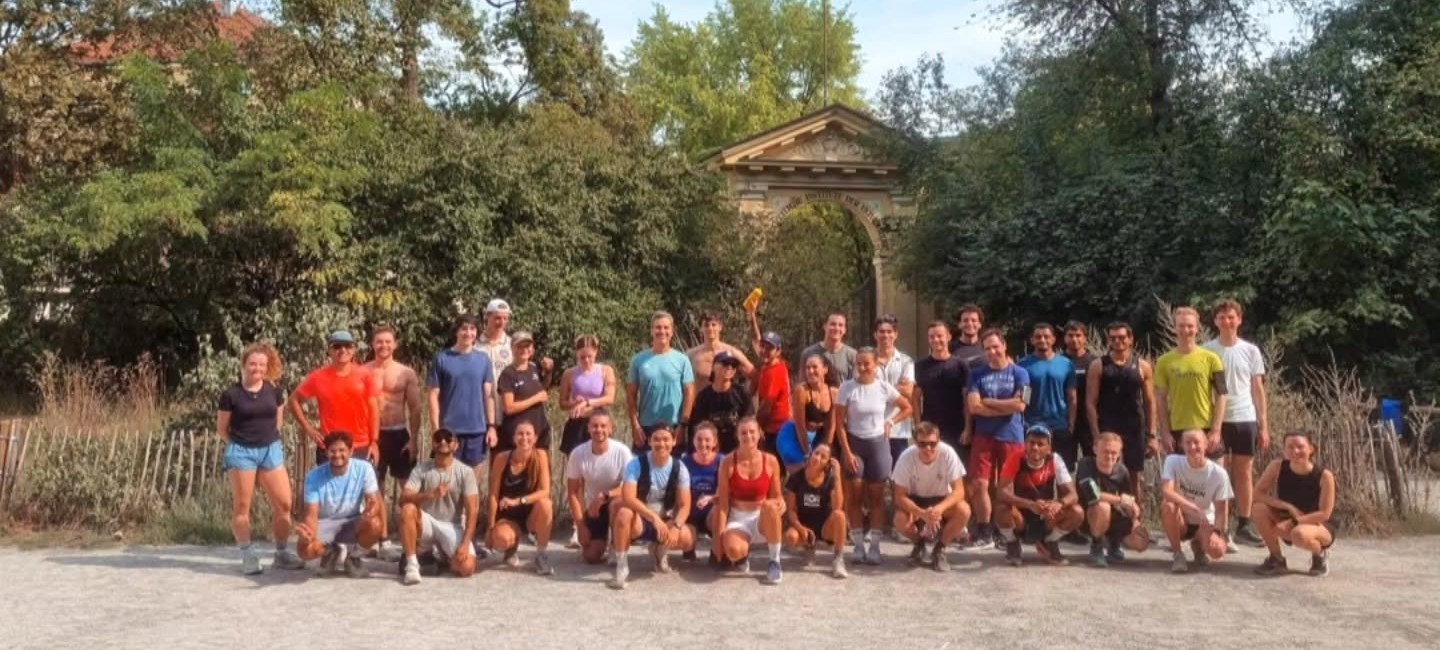
Running slow feels like it should not make you faster, but it does. Most strong endurance athletes run about 80 percent of their kilometres easy, and most of us run our easy days too hard. Here is why slow works, and how to keep easy actually easy.
The quick answer
Most of us run our easy days too hard. It feels productive, it looks better on Strava, and it quietly holds us back.
The best endurance athletes in the world do the opposite. Roughly 80 percent of their running is easy, a small slice is really hard, and they spend very little time in the vague middle. Running slow lets you run more, recover better and show up to the hard sessions with legs that can actually go hard. [1,2]
And "easy" is not just a vibe. It has a definition: running below your first ventilatory or lactate threshold. In normal words, the effort where you can still chat in full sentences and your breathing stays calm. Go above that and you are no longer doing what an easy run is for. [1,2]
The 80/20 pattern
When researchers looked at how elite endurance athletes really train, the same split kept showing up: around 80 percent of sessions easy and about 20 percent hard. It showed up in running, rowing and cross-country skiing. [1,2] Nobody handed this down as a rule. It is simply what successful athletes turned out to be doing, and it is surprisingly consistent.
There are a few ways to divide up intensity. Polarised training means a lot of easy running, a real dose of hard running and almost nothing in between. Pyramidal means most of the volume easy, a bit less at threshold and the least flat out. Threshold-focused training parks a lot of work in the moderate middle. Elites mostly live in the first two and move between them during a season. [3,4]
Why hard and easy beats medium everything
Here is the trap. Left alone, our "easy" runs drift up into a moderate effort. Too hard to be restful, too easy to really train anything. Researchers call it the black hole. [2,4] You collect the tiredness without the benefit of either end.
We see it every Sunday. The social run is meant to be easy, somebody feels good, the pace creeps up, and suddenly the front group is doing a tempo run and nobody is talking any more. That is exactly the drift the research describes.
When it was tested properly, the elite pattern held up. In a trial with well-trained endurance athletes, a polarised programme gave the biggest gains in VO2 peak and performance, ahead of threshold, high-intensity and high-volume plans. The threshold-heavy group improved the least. [3] The honest footnote: a 2024 meta-analysis found that the advantage of polarised training is real but modest, clearest in shorter training blocks and in athletes who are already well trained. For several performance measures it was about the same as other approaches. [5] So it is a very good default, not the only way.
What easy running builds
Slow kilometres are not junk kilometres. A big base of easy running builds your aerobic engine: more capillaries, more mitochondria, better fat burning. All of that lets you hold a pace with less effort. [2]
It also builds what physiologists call durability, which is how well your efficiency holds up late in a long run when you are tired. [6] It is a big part of why trained marathoners do not fall apart at kilometre 32. Or at least fall apart a little later ;)
And easy runs are cheap. They cost you very little recovery, so you can stack up a lot of volume and save your energy for the few sessions that need it, like Wednesday intervals. [2] If you run everything moderately hard, you cannot run as much, and your hard days get worse too.
How to keep easy actually easy
- Use the talk test. If you cannot speak in full sentences, you are going too fast. If you can gossip the whole way, you are doing it right. This lines up well with staying under that first threshold. [2]
- Do not trust heart rate zones on their own. They are a useful guide, but heat, fatigue, cardiac drift and big differences between people mean a fixed percentage can put you at the wrong effort. Use them as a second opinion. [2]
- Let it feel almost too slow. That is usually the sign you got it right. Nobody on the Isar is checking your pace.
A note for everyday runners
Most of the strong evidence comes from trained and elite athletes, so do not treat the exact 80/20 split as a law. [4,5] One study with recreational runners even found that a more threshold-focused plan gave similar gains to a polarised one, in less weekly time. [7] If you only have a few hours a week, some running in the middle is not wasted.
The lesson that holds for everyone is smaller and safer: do not let your easy days quietly turn into medium days.
The takeaway
- Easy means below your first threshold. You can talk, your breathing is calm. [1,2]
- Elites run roughly 80/20 easy to hard and avoid the moderate middle. [1,2,4]
- Polarised training tests well, with a real but modest edge, mainly in trained athletes. [3,5]
- Easy volume builds your aerobic base and your durability at a low recovery cost. [2,6]
- Keep easy easy with the talk test, and treat heart rate zones as a second opinion. [2]
- Recreational runners have more room to play. The main thing is not running the easy days too hard. [7]
Slow down on the slow days. It feels wrong, and it is how you get to run more and race faster :)
How is it going for you?
Be honest: are your easy runs actually easy? Try the talk test this week and tell us in the community chat how it went. Or test it with us on Sunday. The social run is easy on purpose, there is brunch at Convivio afterwards, and talking the whole way round is basically the training plan.
- 1. Seiler S, Kjerland GO. Quantifying training intensity distribution in elite endurance athletes: is there evidence for an "optimal" distribution? Scandinavian Journal of Medicine and Science in Sports. 2006;16(1):49-56.
- 2. Seiler S. What is best practice for training intensity and duration distribution in endurance athletes? International Journal of Sports Physiology and Performance. 2010;5(3):276-291.
- 3. Stoggl T, Sperlich B. Polarized training has greater impact on key endurance variables than threshold, high intensity, or high volume training. Frontiers in Physiology. 2014;5:33.
- 4. Stoggl TL, Sperlich B. The training intensity distribution among well-trained and elite endurance athletes. Frontiers in Physiology. 2015;6:295.
- 5. Silva Oliveira P, Boppre G, Fonseca H. Comparison of polarized versus other types of endurance training intensity distribution on athletes' endurance performance: a systematic review with meta-analysis. Sports Medicine. 2024;54(8):2071-2095.
- 6. Maunder E, Seiler S, Mildenhall MJ, Kilding AE, Plews DJ. The importance of durability in the physiological profiling of endurance athletes. Sports Medicine. 2021;51(8):1619-1628.
- 7. Festa L, Tarperi C, Skroce K, La Torre A, Schena F. Effects of different training intensity distribution in recreational runners. Frontiers in Sports and Active Living. 2020;1:70.
Frequently asked questions
How slow should an easy run be?+
What is 80/20 running?+
Are easy runs just junk miles?+
Can I just rely on heart-rate zones to run easy?+
Does 80/20 apply to beginners and recreational runners?+
Reading about running is good. Running with people is better.
See this week's sessions →
Comments
No comments yet. Be the first to share your experience.
Log in to comment